
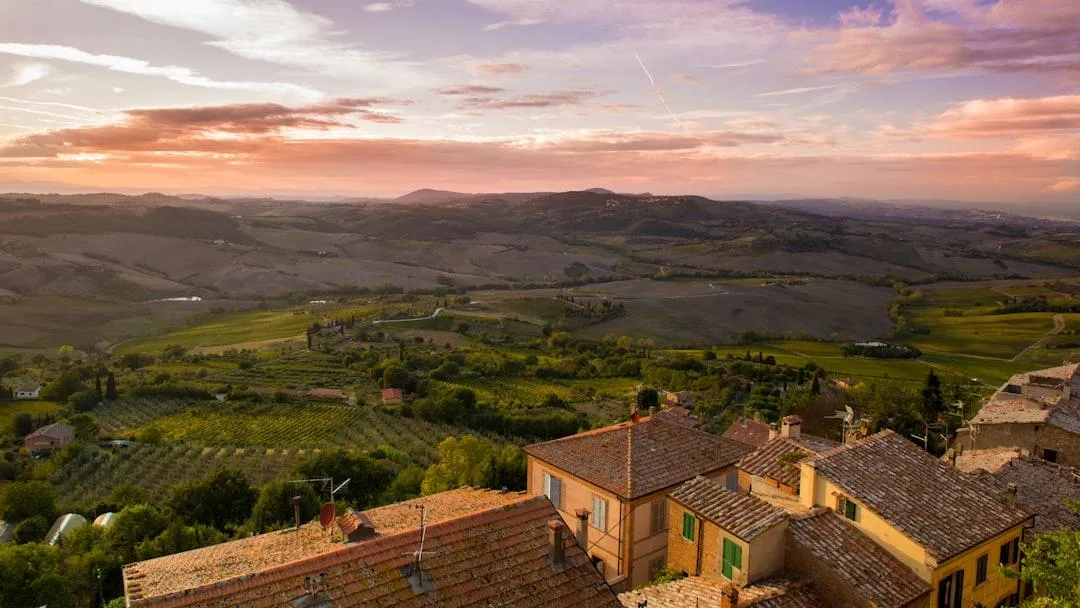
TUSCANY, ITALY -- CURATED ITALY TRIPS
Tuscany isn't a destination.
It's a feeling.
Rolling hills, slow mornings, wine you’ll reference for the rest of your life — and a rhythm that reminds you what life is actually for. This is one of my most-requested trips. And one I’d put my name on every time.
WHY THIS DESTINATION
Why Tuscany? Because nowhere else does this to you.
There's something specific that happens in Tuscany that I've never been able to find language for — and I've tried. It has something to do with the light, and something to do with the pace, and something to do with sitting down to a plate of handmade pasta in a restaurant that doesn't have a sign outside and feeling like you found the actual world.
My clients come home from Tuscany changed. Not dramatically. Just — quieter. More certain about what matters. That shift is the point.
It's also one of the most intelligently laid-out travel regions on earth. Florence for art and history. Siena for the medieval streets and the campo. San Gimignano for the towers. The Chianti Classico wine road for the vineyards. The Val d'Orcia for views that belong in a painting — because they've been in several.
You don't have to choose. You can have it all — if someone plans it properly. ✈️
What I Build
What I Build For Tuscany
Where You Stay
ACCOMODATION THAT ACTUALLY DELIVERS
Tuscany’s real magic is in an agriturismo in the hills — a working farm with rooms, a terrace, and a view that stops you mid-coffee. Or a well-located apartment in Florence. Or a small hotel in Siena. I know which ones photograph beautifully and which ones are actually worth it.
How You Move
GETTING AROUND THE RIGHT WAY
A Chianti wine tasting at an estate that doesn’t take walk-ins. A cooking class in a farmhouse kitchen. The restaurant in Florence the locals actually go to. The things you don’t find on TripAdvisor because the people who know about them aren’t posting about them.
What You Do
EXPERIENCES WORTH THE RESERVATION
A Chianti wine tasting at an estate that doesn’t take walk-ins. A cooking class in a farmhouse kitchen. The restaurant in Florence the locals actually go to. The things you don’t find on TripAdvisor because the people who know about them aren’t posting about them.
SAMPLE ITINERARY
What A Week Might Look Like
This is one version. Every trip I build is designed around you — your pace, your interests, what you want to feel. This is a starting point, not a template.
Day 1-2
Florence
Arrive, recover, walk the Uffizi if you want it — but not on day one. Day one is for espresso at a bar where they don’t speak English, dinner at a trattoria in the Oltrarno, and sleep. Day two is Florence proper — the Duomo, the Ponte Vecchio, the market at Sant’Ambrogio.
Day 3
Chianti Wine Road
Drive south into the hills. Stop at two or three estates — I’ll book the visits in advance. Lunch somewhere with a terrace and a view. End the day checking into the agriturismo where you’ll spend the next few nights.
Day 4
Siena
One of the great medieval cities in Europe, and regularly underestimated. The Piazza del Campo alone is worth the drive. Arrive midmorning, walk slowly, eat lunch on the square, find your way through the back streets.
Day 5
Val d'Orcia
The photographs don’t lie. Montalcino, Pienza, Montepulciano. Drive it slowly. Buy wine directly from a producer. Stop whenever something looks worth stopping for. It usually is.
Day 6
A Slow Day
Built in intentionally. Stay near the agriturismo. Read. Walk into the nearest village for lunch. Do nothing worth photographing. This is often the day people talk about the most when they come home.
Day 7
Florence -- Depart
Return to Florence, drop the car. A final dinner somewhere good — I’ll have a recommendation — and then home. Or north to the lakes. Or Rome, if you want to extend.
IS THIS RIGHT FOR YOU?
Is Tuscany Right For You?
Tuscany is for the traveller who wants to slow down. Not the traveller trying to see as many countries as possible — the traveller who wants to actually be somewhere.
It’s extraordinary for couples. It’s excellent solo — especially for women travelling alone, who consistently tell me they felt completely safe and genuinely welcomed. It works beautifully as a first international trip, because Italy is simultaneously deeply foreign and completely legible.
If you’re wondering whether it’s too complicated for a first-timer: it isn’t. Not when someone who has been there builds it for you.
“Something you want to quote” — Author
Add a bullet list to your content:
List item 1
List item 2
List item 3
STILL WONDERING?
One of my most-requested trips. I’d put my name on it every time — because I have, and I’ve never regretted it.
FROM MY CLIENTS
What my clients say about Tuscany
“An experience I will never forget, everything was planned better than I could imagine” — Shelley, Tuscany 2024
“This is a place I will return to, for the food, the wine, the view” — Robert, Tuscany 2021
The Practical Bit
Best Time To Go
Late April through June: warm, green, not yet peak-crowd season. September through mid-October: harvest season, golden light, thinner crowds. Both are ideal. July and August are doable but busy and hot.
Budget Range
Tuscany works at a range of budgets. Accommodation is where it varies most — a rural agriturismo and a boutique Florence hotel are different price points. I’ll help you understand what each delivers.
How Much Time To Spend
Seven to ten days is ideal for a first visit. Long enough to slow down. Long enough that the pace of the place starts to feel natural. Shorter is possible — I’ll just design it differently.
Getting There
Most US travellers fly into Florence direct, or into Rome and take the train north — a beautiful introduction to Italian rail. I’ll walk you through both options and help you decide
Ready to talk about Tuscany?
Tell me what you’re imagining. A week. A couple of weeks. Solo, with your partner, with a group of friends. Whatever you’ve got — that’s enough to start. I’ll come back to you with real ideas and honest opinions.


